🗄️ Vector databases
A vector database stores data as mathematical vectors, enabling efficient similarity searches for AI-driven applications like search engines, recommendation systems, and Retrieval-Augmented Generation (RAG). This makes it easier for developers to integrate advanced AI functionalities into their applications with ability to search and understand relationships within data.
26 tools
Vector Databases 20




Open-source Postgres vector database and AI toolkit built on pgvector



Serverless vector and full-text search engine built on object storage for cost-efficient scale

In-memory vector database for low-latency similarity search across AI applications


Open-source PostgreSQL extension for vector similarity search alongside relational data


Meta's open-source library for efficient similarity search and dense vector clustering

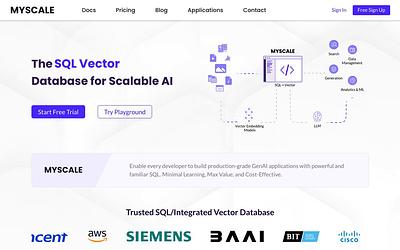

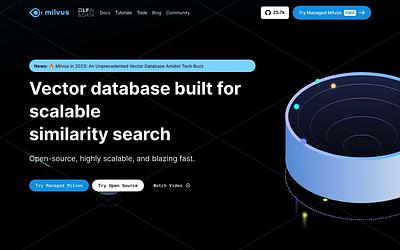


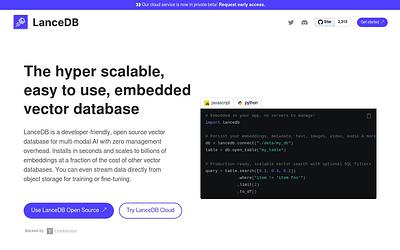

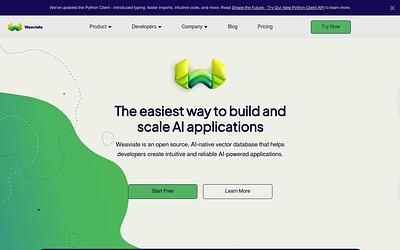

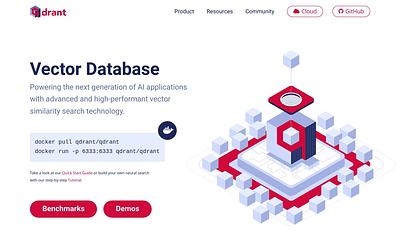

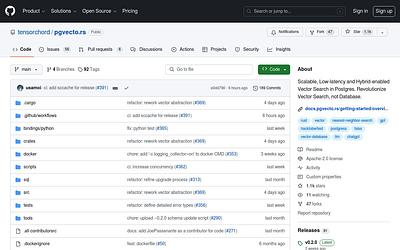
pgvecto.rs is a Postgres extension that provides vector similarity search functions.

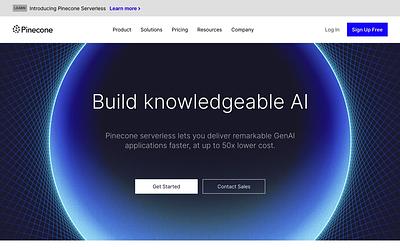


AI Search 5

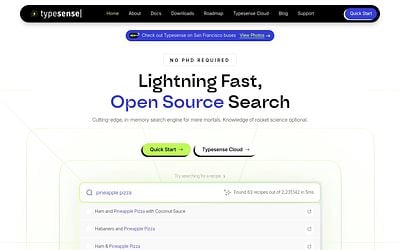
Open-source search engine in Rust with full-text, semantic, and hybrid search
Open-source typo-tolerant search engine with built-in vector and hybrid search

Microsoft managed search service with vector, hybrid, and agentic retrieval for RAG


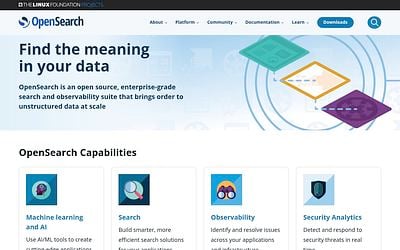
Open-source search and analytics suite with full-text, vector, and hybrid search

Other 1


Vector databases overview
Vector databases are purpose-built for storing, indexing, and querying high-dimensional embeddings. They power retrieval-augmented generation (RAG) pipelines, semantic search, recommendation systems, and any application that needs to find similar items based on meaning rather than exact keyword matches.
These databases use specialized indexing algorithms like HNSW, IVF, and product quantization to perform approximate nearest neighbor (ANN) searches across millions or billions of vectors with millisecond latency. Most support hybrid search that combines vector similarity with traditional metadata filtering.
The landscape includes both standalone vector databases and vector search extensions for existing databases like PostgreSQL. The right choice depends on your scale, latency requirements, operational preferences, and whether you need a managed service or can run infrastructure yourself.
Browse other categories
Related stacks
See how vector databases tools fit into a full infrastructure stack.
Frequently Asked Questions
What is a vector database?
A vector database stores data as high-dimensional numerical vectors (embeddings) and supports efficient similarity search across them. When you convert text, images, or other data into embeddings using an AI model, a vector database lets you find the most similar items by comparing their vector representations.
Do I need a dedicated vector database for RAG?
Not necessarily. For small datasets (under 100K documents), pgvector with PostgreSQL works well and avoids adding another service. Dedicated vector databases become worthwhile when you need sub-millisecond latency at scale, advanced filtering, or features like real-time index updates and multi-tenancy.
What is the difference between HNSW and IVF indexes?
HNSW (Hierarchical Navigable Small World) builds a graph structure that provides excellent query speed and recall but uses more memory. IVF (Inverted File Index) partitions vectors into clusters, using less memory but requiring tuning of the number of clusters to probe. HNSW is generally preferred for latency-sensitive applications, while IVF suits larger-scale, cost-conscious deployments.
How do I choose between managed and self-hosted vector databases?
Managed services reduce operational burden and handle scaling, backups, and updates. Self-hosted options offer more control, lower costs at scale, and data residency flexibility. Consider your team's ops capacity, data sensitivity requirements, and expected query volume when deciding.
Is your product missing?