🎬 Media Generation
APIs that generate images, video and interactive avatars from a prompt, an image or an audio stream. These are the model-serving endpoints developers integrate as a component, billed per second or per generation.
A media generation API is a hosted endpoint that returns an image or a video from a prompt, an image or an audio stream, so you call it instead of running diffusion models on your own GPUs. Pricing is usually per second of output or per generation rather than per token.
In this category
11 tools
Video Generation APIs 7













Image Generation APIs 4

Image generation API built for design work, with vector (SVG) output, brand styles and editing tools

API for the FLUX image models and FLUX 3 Video from the German lab that trains them, pay as you go


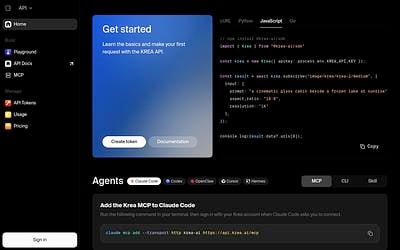
Media Generation overview
Media generation APIs serve diffusion and video models the way inference APIs serve language models: you send a request, they return an asset. The category covers text-to-video, image-to-video, audio-to-video, image generation and real-time interactive avatars.
Billing here works differently from LLM APIs. Most providers charge per second of generated output, priced by resolution and model variant, or per generation at a fixed size. That makes cost predictable per asset but harder to compare across vendors, since a cheap per-second rate at 720p can cost more than a dearer one that needs fewer retries.
The practical differentiators are latency, resolution ceilings, whether the API streams or makes you poll, and what control surface is exposed. Keyframe control, video-to-video, reframing and HDR or EXR export matter for production pipelines; real-time latency under half a second matters for avatars in a live conversation.
Products that lead with a finished creative tool are listed elsewhere or not at all. What is here is infrastructure a developer calls from their own application.
Browse other categories
Frequently Asked Questions
What is a media generation API?
A hosted endpoint that returns an image or a video from a prompt, an image or an audio stream. You call it from your own application instead of running diffusion or video models on GPUs you manage.
How is media generation priced compared to LLM APIs?
Usually per second of generated output or per generation, priced by resolution and model variant, rather than per token. LTX bills from $0.09 per second at 720p and Luma from $0.15 for a five-second 540p clip (September 2026). A low per-second rate is not automatically cheaper, since a weaker model may need more retries.
What is the difference between a media generation API and a video editor with an API?
A media generation API is infrastructure you integrate as a component: you send a request and get an asset back. A creative tool with an API bolted on sells a finished editing product and exposes some of it programmatically. This category lists the former.
Which APIs support real-time interactive avatars?
Anam, Tavus and LemonSlice generate avatar video in real time for conversational agents, streaming frames as the conversation happens rather than rendering a file. Reported latencies sit between roughly 180ms and 471ms, which is what makes back-and-forth conversation feel natural.
Is your product missing?